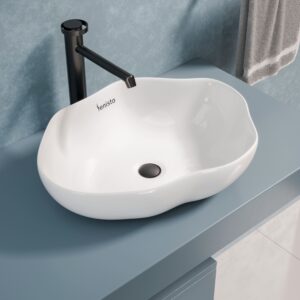
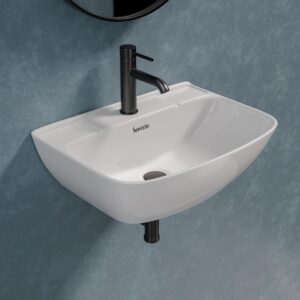
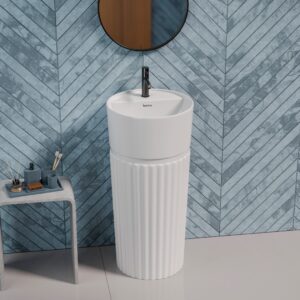
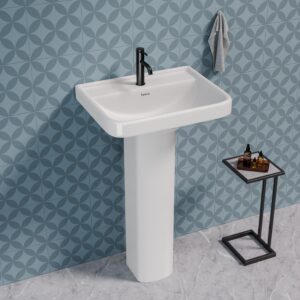
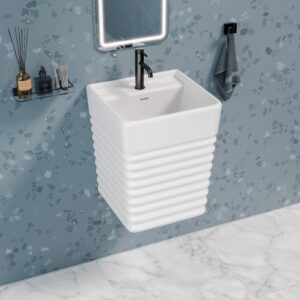
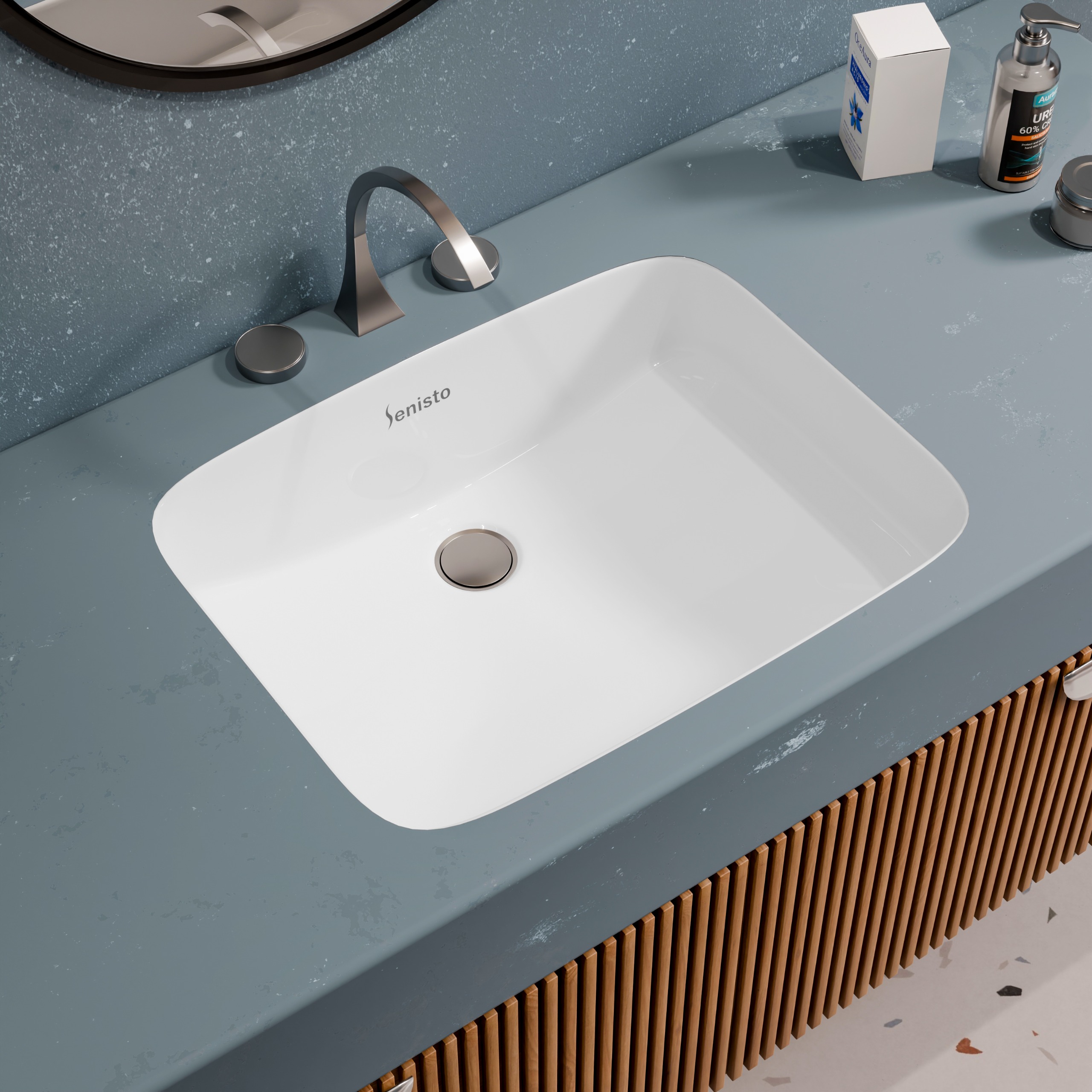
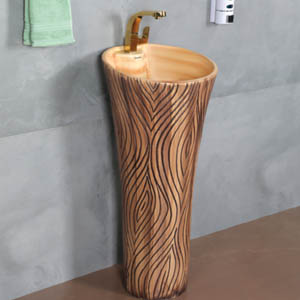
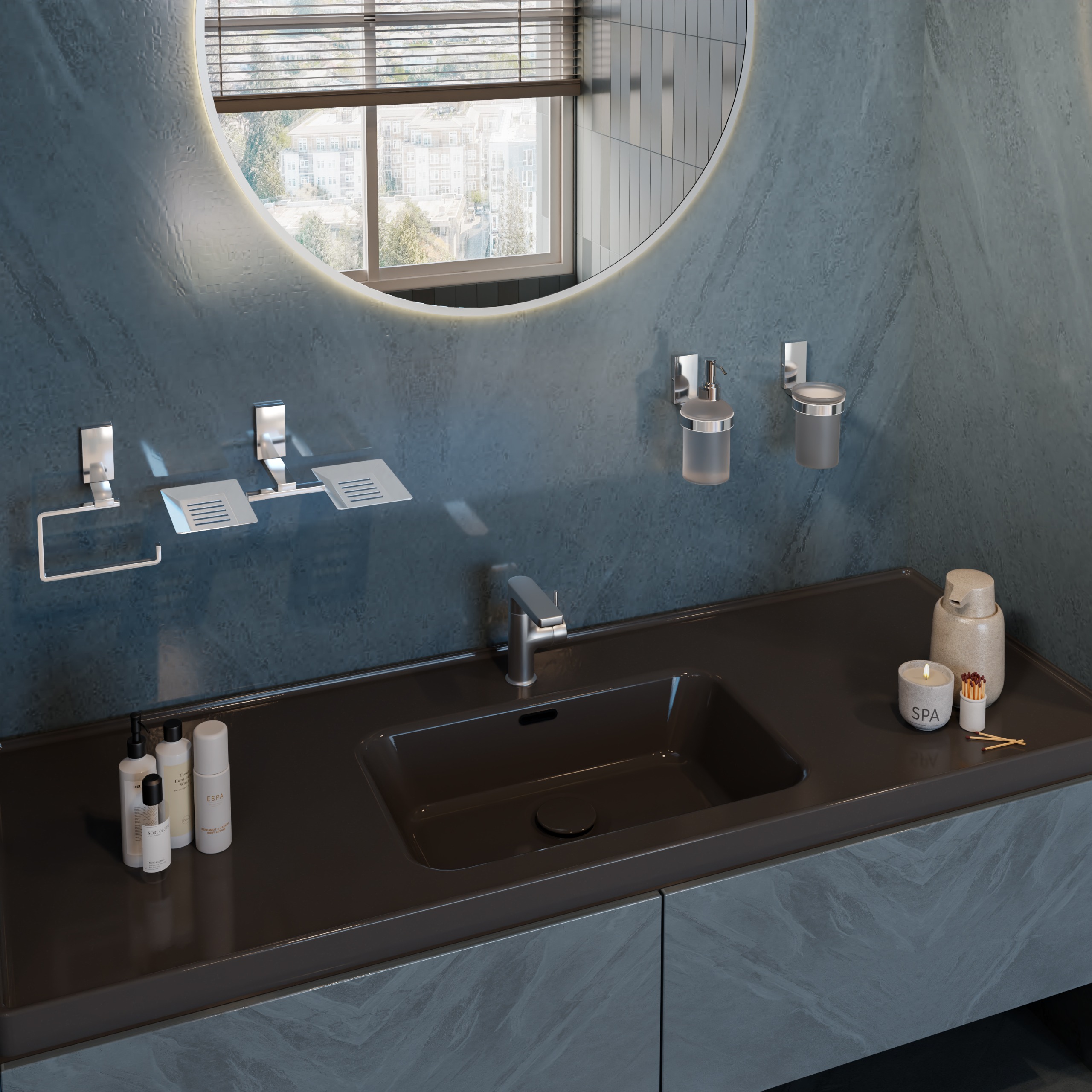
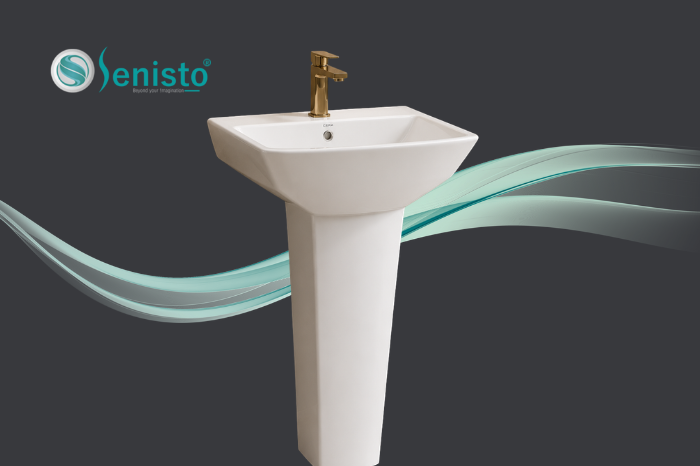
A bathroom fixture may seem like a no-brainer. The form of a curved basin, a pedestal to support it and a smooth ceramic surface may appear at first sight to be simple, but there has been a precise consideration of the proportions, symmetry, balance and spatial relationships. A designer pedestal wash basin is an example of how geometry can subtly affect the look and feel of a bathroom.
A wash basin has to meet a number of criteria; it is not just a decorative item. It must be symmetrical, utilitarian, space-efficient, and comfortable for daily use. Geometry transforms into the hidden structure that brings together all of these needs. Geometry becomes the unseen structure that holds all of these together.
A proportion creates a sense of visual harmony
Designers take a look at proportion as one of the first things that come to mind. These components in relation to each other, as well as their width and depth, dictate the look of the fixture in a room.
A basin which is disproportionately large for its pedestal, or too narrow in form, can seem unstable or out of proportion. Designers then play with thoughtfully planned relationships between proportions in order to achieve a state of visual balance.
When a fixture is proportioned well, it feels balanced even if the viewer does not pay any attention to the design, or even notice why.
The curved line is not just for decoration!
Curved edges are often synonymous with elegance but also play a role in how a basin will play with its environment. Rounded shapes can help to break up the stark lines that are common in bathrooms.
The geometry of the bowl is also going to influence the movements of water, surface cleaning, and how the user interacts with the bowl. This results in curvature being both aesthetic and functional.
In a good basin, form and function are usually in harmony and in geometric logic.
The Pedestal provides vertical balance
The unique characteristic of this type of basin is its pedestal. It not only serves to support the wash basin physically.
The pedestal creates a vertical line of sight from the basin to the floor and provides a sense of continuity. It can alter the overall character of the fixture with its width, taper and height.
Your basin will have a well-balanced pedestal, which will make it look like it has a firm foundation but will not appear cumbersome.
Symmetry brings order
Architecture and product design have long been identified with symmetry for visual stability. A symmetrical basin designed as a central focus can be a powerful element on a tiled wall or under a mirror.
But today’s designers aren’t always making use of perfect symmetry. The subtle changes of curves, edges and supporting forms can add character without sacrificing balance.
But the best designs tend to be both mathematical and visual.
Negative Space Matters Too
Geometry does not only exist on the surface of the ceramic. The surrounding space around a fixture can also affect the impression that it makes.
A pedestal wash basin can be an effective way to keep a bathroom tidy and spacious in an appropriately sized space. However, if they are set too close to the surrounding elements, the same basin can give the appearance of being overcrowded.
When designing bathrooms, the designers take into account the object and the surrounding space.
Geometry Supports Ergonomics
Even a pretty fixture has to be in the user’s comfort zone. Everyday interaction is affected by basin height, bowl depth, rim position and reach.
Using dimensional relationships is how designers achieve a balance of appearance and practicality. The outcome is a product that is natural and not cumbersome.
Here, geometry is directly related to human experience.
Ceramic Technology Makes Complex Forms Possible
The designers of sanitaryware have more options at their disposal thanks to modern manufacturing. The manufacturers use better moulding techniques, ceramic formulation, glazing processes and quality control to achieve consistent complex shapes.
This allows designers to experiment with slimmer profiles, unique curves and elegant transitions, without compromising on reliability.
Geometric concepts can be applied and put into practice.
A fixture can become architectural
The most interesting trend in modern bathroom design is the merging of product design and architecture. The form of a wash basin can have an impact on the overall visual identity of a room.
A designer pedestal wash basin can serve as a miniature element of architecture, creating verticality, symmetry and visual rhythm in the bathroom.
That is why, despite being bordered by ornate tiles, mirrors, and accessories, some fixtures stand out: They have a geometry that makes them present.
Final Words
The beauty of an engineered wash basin pedestal doesn’t just happen. The curves, proportions, symmetry and supporting structure are all there, and they have been thoughtfully designed within a geometric framework.
Geometry without engineering precision equals design thinking with no effect—invisible geometry. It influences the character of the basin, its scale, its use and its sense of naturalness as a component of the architecture.
In contemporary bathroom planning, it is not only a mathematical construct. It’s one of the subtle elements that can make a functional fixture into a standout design.