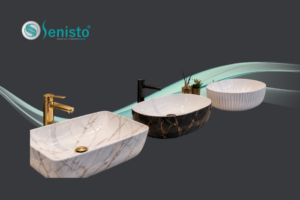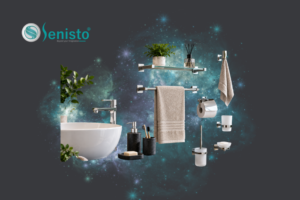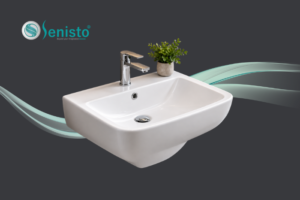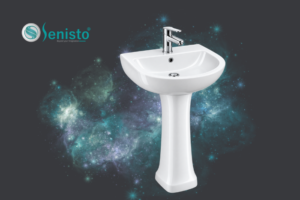
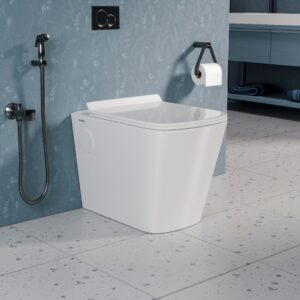
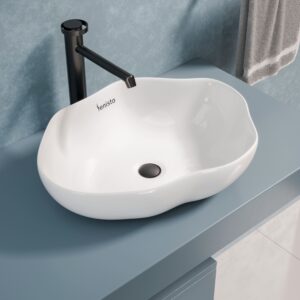
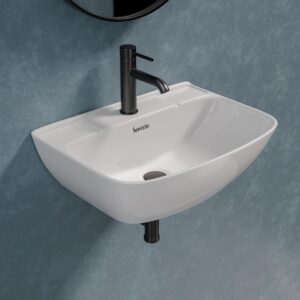
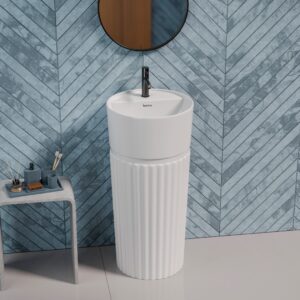
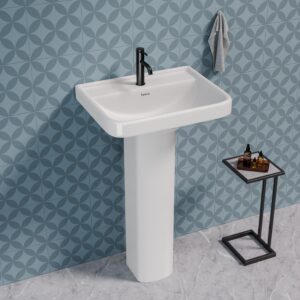
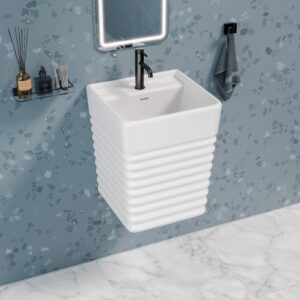
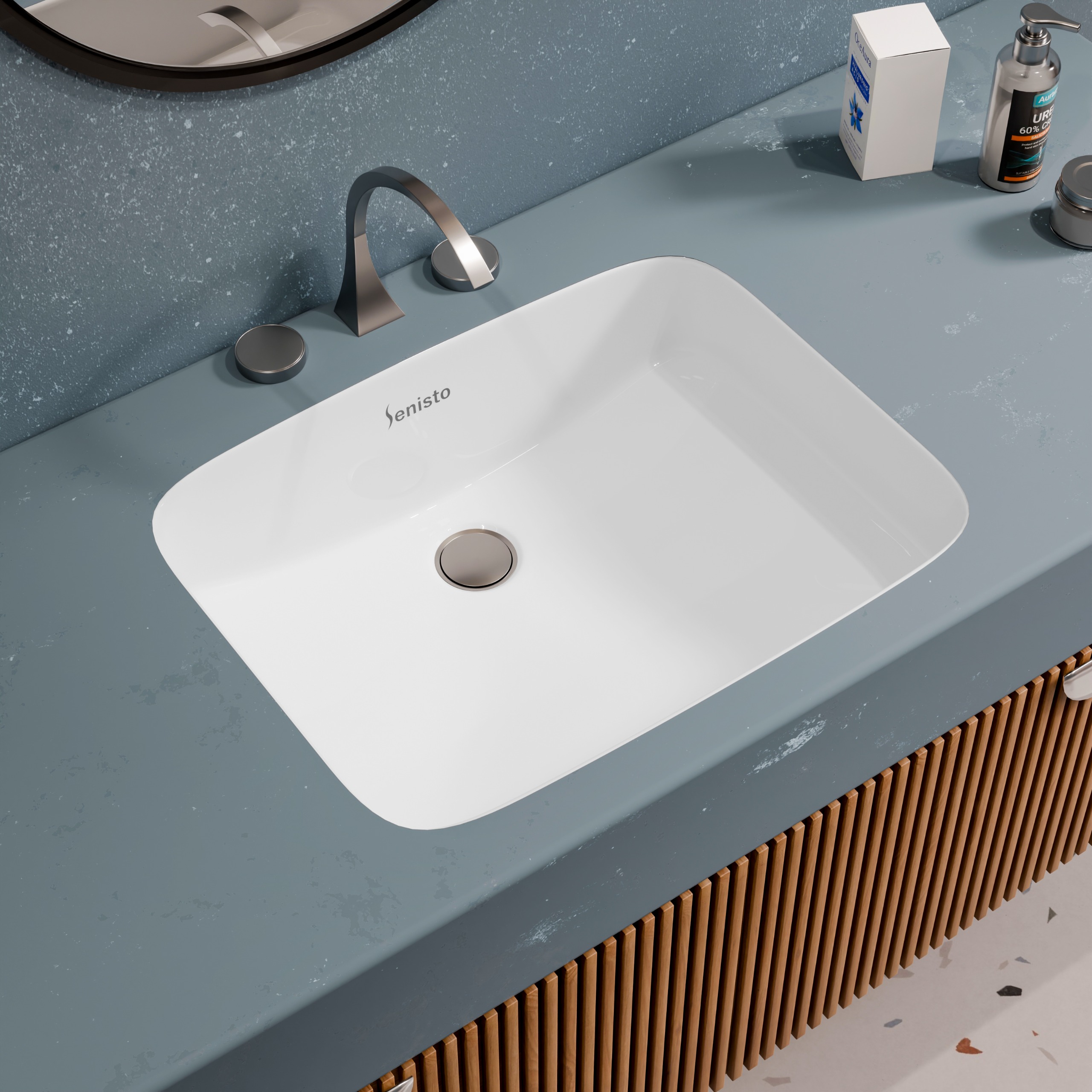
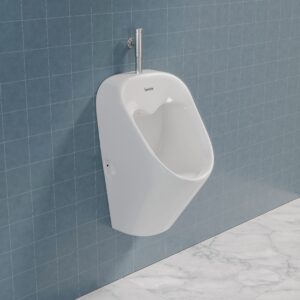
While larger items, such as tiles, mirrors, showers and cabinetry, are often considered when evaluating bathrooms, smaller fixtures can make all the difference in the ambiance of a room. A designer wash basin can be a showstopper, without being a showboat. Form, scale, texture and the context of its relationship to any other elements can establish a focal point.
The Basin as a Visual Anchor
While a wash basin is in a practical location, it is one of the first facilities that many people will see. It’s always placed under a mirror and in front of a completed wall, which makes it the centre of the room.
With careful design, horizontal and vertical elements can be balanced in a basin. Its width, height and form echo the architecture of the room.
Proportion Creates the Drama
Successful basin designs generally involve a certain amount of proportion and not too much ornamentation. The depth, rim thickness, width & projection will influence the sense of weight and weightlessness of the fixture.
Heavy, deep basins can look solid, while thin-footed basins can look light. In a small bathroom, size also influences circulation and the amount of counter space available.
The challenge is to achieve presence while not overpowering the basin.
Curves Versus Geometry
Modern bathroom interior features both soft curves and sharp angles. Rounded basins can break up spaces made up of hard tiles, glass and metal, and rectangular shapes can lend more architectural character.
Curves make for more subtle changes, while hard lines bring structure and alignment to the fore.
The Surface Tells Its Own Story
After the first impression of shape, it is the surface that counts. The shinier the ceramic, the more light will reflect off it, which can give a bathroom a shiny, bright look. The matte finishes provide a more subtle, modern look.
The surface uniformity is also important. Under strong lighting, it is possible for small colour, gloss or texture differences to be noticed. Finishing is thus an aesthetic and manufacturing concern.
Light Changes the Experience
A wash basin could transform dramatically when it is illuminated by light. Natural lighting brings out the curves and edges slowly, whereas artificial lighting focuses on the silhouette and surface.
The finish and silhouette of a basin can be accentuated through the interaction of light reflected in a mirror.
The Mirror-Basin Relationship
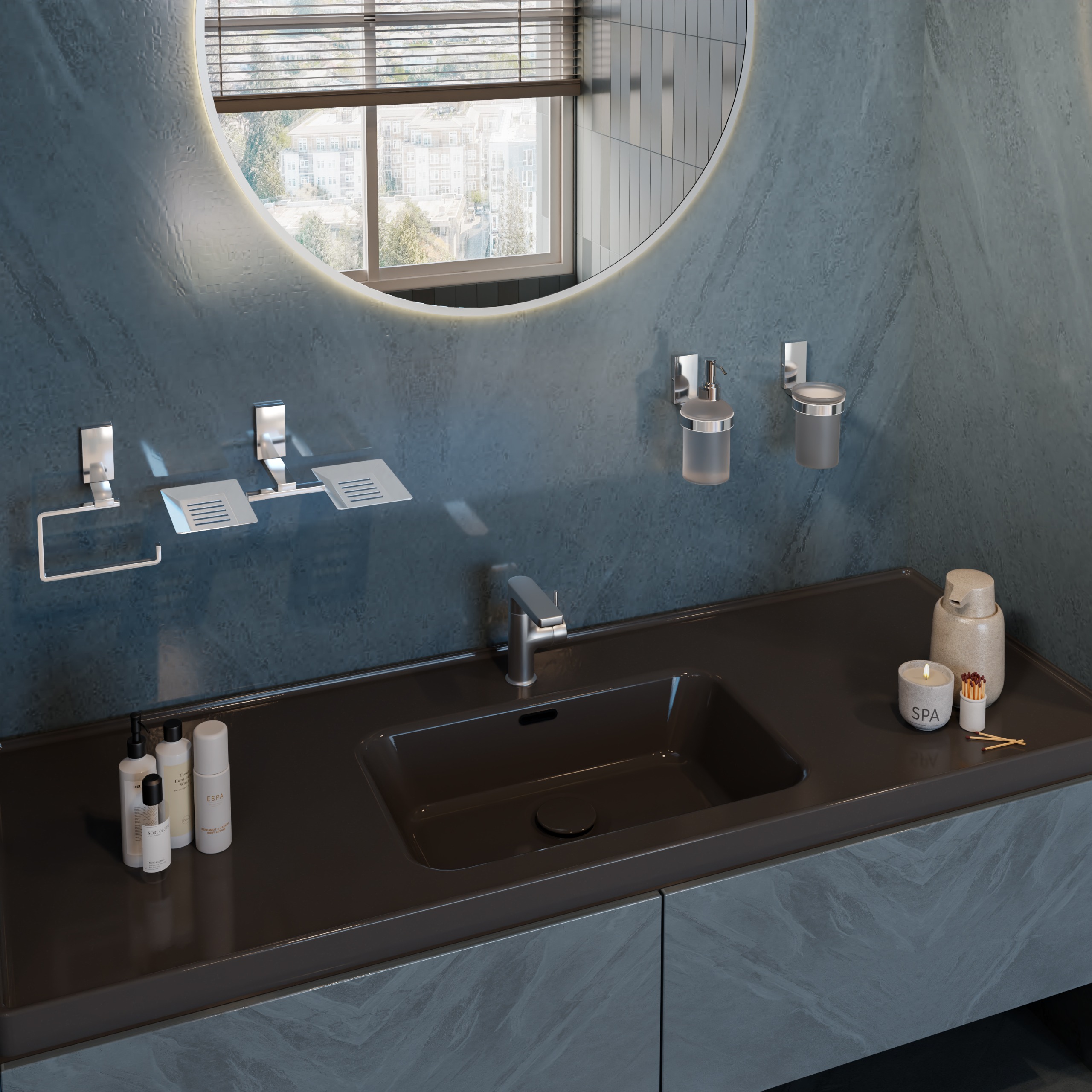
The basin’s most frequent visual companion is the mirror. They can set the pace for the entire vanity area.
This can lead to a lack of balance if the basin is wide and the mirror is narrow, or to a sense of proportion if they are well matched. Curved basins can be echoed by circular mirrors and geometric forms can be reinforced by rectangular mirrors.
Visual drama isn’t about competing – it’s about coordinating!
Ergonomics Beneath the Design
A designer wash basin is still a useful product. All of these factors impact everyday use, such as comfortable height, adequate bowl depth, and placement of the tap and surrounding space.
If it doesn’t look appealing, or creates splashing, awkward reach or limited counter space, it’s an incomplete design.
Sophistication is about a combination of visual interest and usability. It should make the person feel comfortable, but without requiring them to consider the engineering choices made.
Water Has a Role in the Shape
The shape of the basin also affects water behaviour. The angle of the bowl, placement of the drain and the smoothness of the inner walls will affect water flow.
Good design takes into account how water can get to the drain without splashing or getting all over the wrong places. This is a direct link between aesthetics and fluid behaviour.
This complexity can be concealed under a simple silhouette, typically the most refined forms.
Ceramic Turns Design Into Reality
Wash basin designs are well suited to ceramic, due to the ability to form curves, planes and a hard, smooth surface that is needed for use in bathrooms.
However, once a concept is developed, the need for control in moulding, drying, glazing and firing occurs to bring the concept to a consistent product. Due to the changes that take place with the ceramic during production, it is essential to control the final dimensions.
The precision in manufacturing enables designers to experiment with unique shapes without compromising uniformity.
Final Words
The elegant stillness of a designer wash basin is the space it occupies in a room, which is just enough to make a difference. The experience is composed of proportion, geometry, surface, movement of light, movement of water and ergonomics.
The basin could be both a visual anchor and a functional tool and an architectural element. While it’s not necessarily a striking design or feature on its own, its best attributes, when considered as a whole, can make a bathroom feel well-rounded, thoughtful and elegant.
The best design is one that doesn’t say “look at me! It just provides the object with intelligence and character to make it a part of the space.