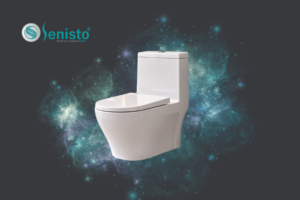
Until recently, the bathroom was a functional space. Fixtures were chosen to serve a purpose, fit in a specific area, and be easily maintained. One of the to-the-point items was a water closet. However, modern bathroom design has turned that notion on its head. Today, proportions, silhouettes, and finishes, together with space relationships, are making the water closet more prominent in the visual identity of the room.
From Necessary Fixture to Designed Form
It starts with an obvious concept: everyday objects need to be designed in a thoughtful way.
A modern toilet should function well, but it should also fit in with the design of the room it is in. The height and projection, curves, edges, and relationship to the wall may affect the overall balance of the bathroom.
The fixture doesn’t just get installed in a completed room. The fixture is becoming more and more the focus of the room.
Proportion Creates Visual Calm
Proportion is the main factor in good bathroom design, not decoration. It can be a bit frustrating to have a water closet that is too big, or its silhouette may be skewed with an awkward look even though it can function properly.
So designers are very conscious of size and proportions. The perception of the fixture is affected by the depth of the bowl, the seat height, the rim thickness, and the overall projection of the bowl.
When all these work in harmony, everything seems like a breeze.
The shape of comfort
One of the lesser-known influences on contemporary bathroom hardware is ergonomics. A good water closet design takes into account the way that people sit, walk, wash, and use the surrounding area.
The height of the seat can have an impact on ease of use, and the shape of the bowl and clearances around the bowl will affect comfort. These choices illustrate that a combination of beauty and usability need not be contradictory.
The best designs make the practical considerations seem natural aesthetically.
Ceramics Become Architecture
The use of ceramic sanitaryware was once just considered for durability and hygiene concerns, but has now been applied to interior design.
Bathrooms are often very geometric, and curved surfaces can help to break up the rigidity. Straight-edged shapes can complement the modern architecture. Glazing may be smooth and produce a continuous surface which can play with light.
In this way, ceramic is more than just a manufacturing material. It becomes a part of the architecture of the room.
The Rise of Wall-Hung Design
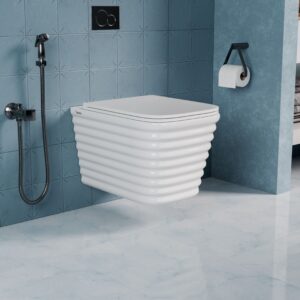
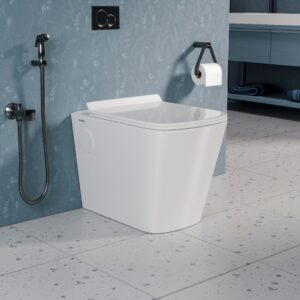
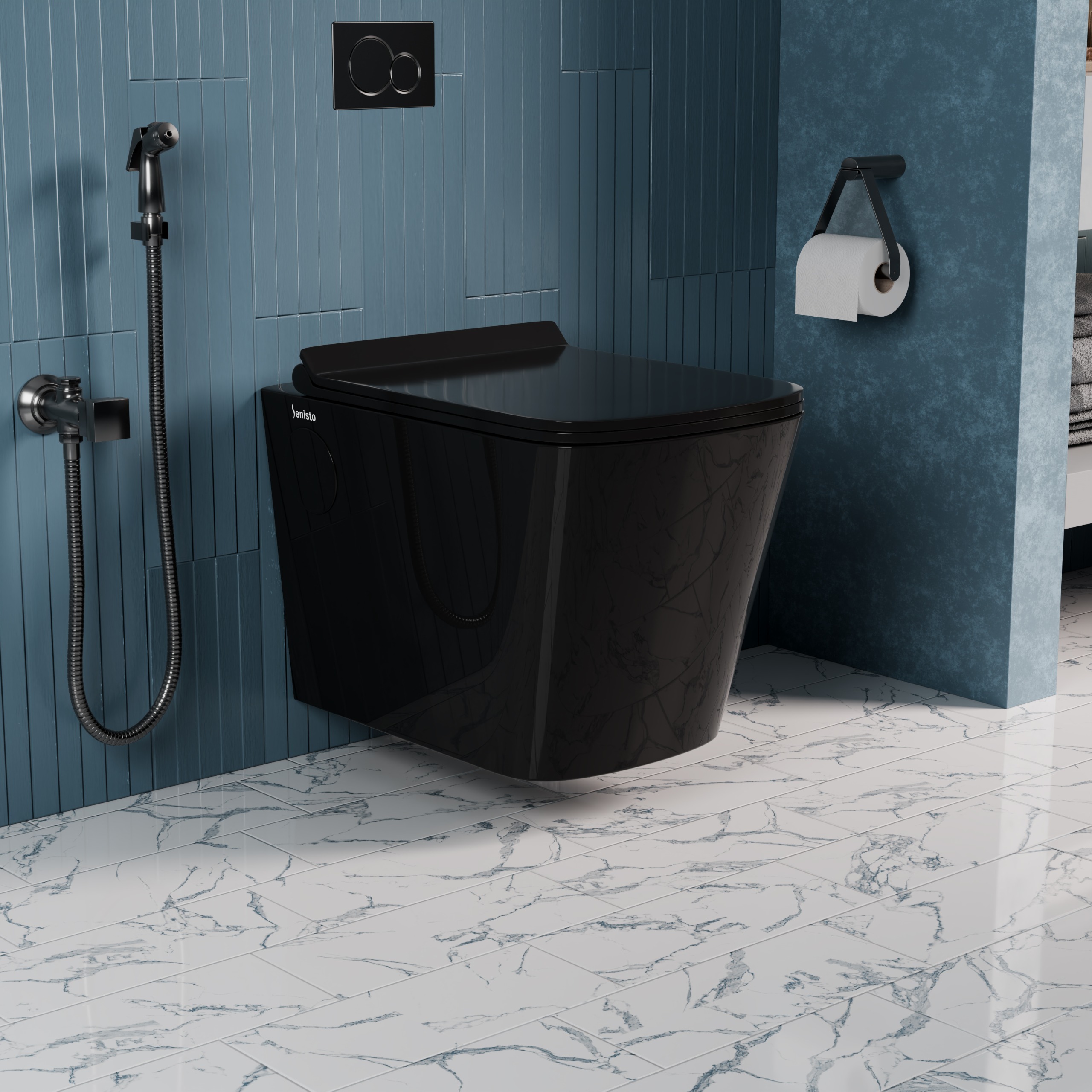
Wall-hung toilets have played a major role in making the water closet a design feature. They raise the fixture off the ground, making it easy to view the negative space underneath the bowl and making the visual composition of the room easier.
It’s a light but strong influence. You will see more floor, the bathroom won’t seem so cramped, and you might be able to clean it more easily.
The floating form also allows the wall, tile, and lighting scheme to become more prominent.
Concealed Technology Changes the Appearance
There are some of the biggest advancements in modern bathroom design that are right in plain sight. Technology can be used without the addition of visual complexity, thanks to concealed cisterns, internal flushing systems, and improved water-management systems.
This has altered the look of the new water closet. Often what is left to see is a cleaner, simpler form, with much of the engineering being behind the wall.
The end effect is a key tenet of modern design: sometimes improved technology yields less visible technology.
Flushing Is Part of the Design Story
The design of a fixture is still incomplete if it cannot perform one of its basic functions efficiently: flushing it.
The geometry of the bowl, the location of the inlets, and the flow paths inside the bowl are all critical to water movement within the bowl. The goal is to achieve water distribution, limit water consumption, and ensure reliable performance.
This secret engineering affects the external appearance of the fixture. There can actually be a lot of fluid-design thinking in an object that appears to be quite minimalist.
Surface Quality Has a Psychological Effect
A bathroom fixture’s surface has a greater effect than just cleaning. The gloss level, smoothness, and uniformity of the product will influence the product’s feel in the space.
A very smooth surface may be able to reflect light and give a more luxurious look. Lighter finishes may create more of a serene look.
Due to the tactile nature of bathrooms, the quality of surfaces has taken on greater importance in the overall user experience.
Design learns from hospitality
Luxury hotels have been a major part in altering the norms that people have with their bathrooms. They tend to feature bathrooms with clean lines, hidden infrastructure, ample space, and cohesive materials.
All of this has slowly trickled over to the world of residential design. Today’s homeowners want bathrooms that are more than just utilitarian.
This contemporary water closet is a good fit in this transition as it can be used to add to the clean and refined aesthetics of a hospitality interior.
Sustainability Is Entering the Aesthetic Conversation
Another element that affects the design of modern fixtures is water efficiency. An unnecessary use of water needs engineering to be efficient in its use of water.
This has meant that efficiency has become integral to product development and not an environmental attribute of the product.
As the design of bathrooms becomes more fashionable, there is a growing demand that the bathroom should be sleek, comfortable, and environmentally friendly.
Manufacturing Precision Makes Design Possible
When they are not easily reproduced, complex shapes and precise proportions are of little value. The dimensions and finish of a sanitaryware product are affected by the ceramic forming, mould accuracy, glazing, and firing.
Making precision thus enables design freedom. Consistency enables designers to work within smaller tolerances and clearer visual lines.
The beauty of a completed piece is always related to the control over the manufacturing process.
The future of the Water Closet
The water closet has been a major part of an interior design trend: everything in every room has become more integrated.
Trusted comfort, water usage, hidden technologies, materials, and flexible shapes will continue to be used together in the future, as well. This focus will not always be on making fixtures more complicated, but on making them perform more intelligently and yet seem simpler.
Final Words
The water closet was not associated with a specific shape or invention at the moment that it turned into a design object. It slowly came into being as bathrooms started becoming part and parcel of architectural and interior design.
At present, the element functions as an intersection between ergonomics, ceramics, water management, and composition. The significance of such an item lies in its capacity to blend into the architecture while having a unique appearance to fill the room.
The contemporary bathroom proves that the practical and aesthetic elements do not belong to two different areas. In some cases, it turns out to be true that the most common element is the most interesting one.