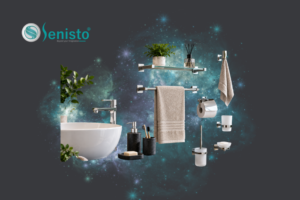
It is difficult to make a bathroom stand out for its single feature. Many times, its character is driven by smaller components; such as a towel holder at the correct height, a shelf that aligns with the basin, a visually appropriate hook that fits in the space, or a soap holder that fits unobtrusively in the room. These facts constitute a design economy for a bathroom accessories manufacturer. Small products have functional roles, visible space and impact on daily user experience of the room.
Why Small Objects Matter
Accessories take up less space than a basin or toilet, but are used and touched over and over again. They place impact on the motion, ease and visual arrange. An awkward hook can make things difficult and a good hook can make every day easier.
These are the intersections of bathroom design and human behaviour.
Design Begins With Use
The first step in designing a good accessory is to know what people do. Towels should be dry, toiletries should be easily accessible, and items that are used often should be easily stored.
For a manufacturer it’s important to take into account reach, height and clearance, as well as the frequency of use. An elegant looking “shelf” that’s hard to access for use is missing part of its purpose. The functional aspects are integral to the design before appearance is seriously thought of.
The Geometry of Placement
An accessory is not in its own right an accessory. Works with walls, mirrors, basins, showers and cabinets. It can change the rhythm of the bathroom by changing its size and location.
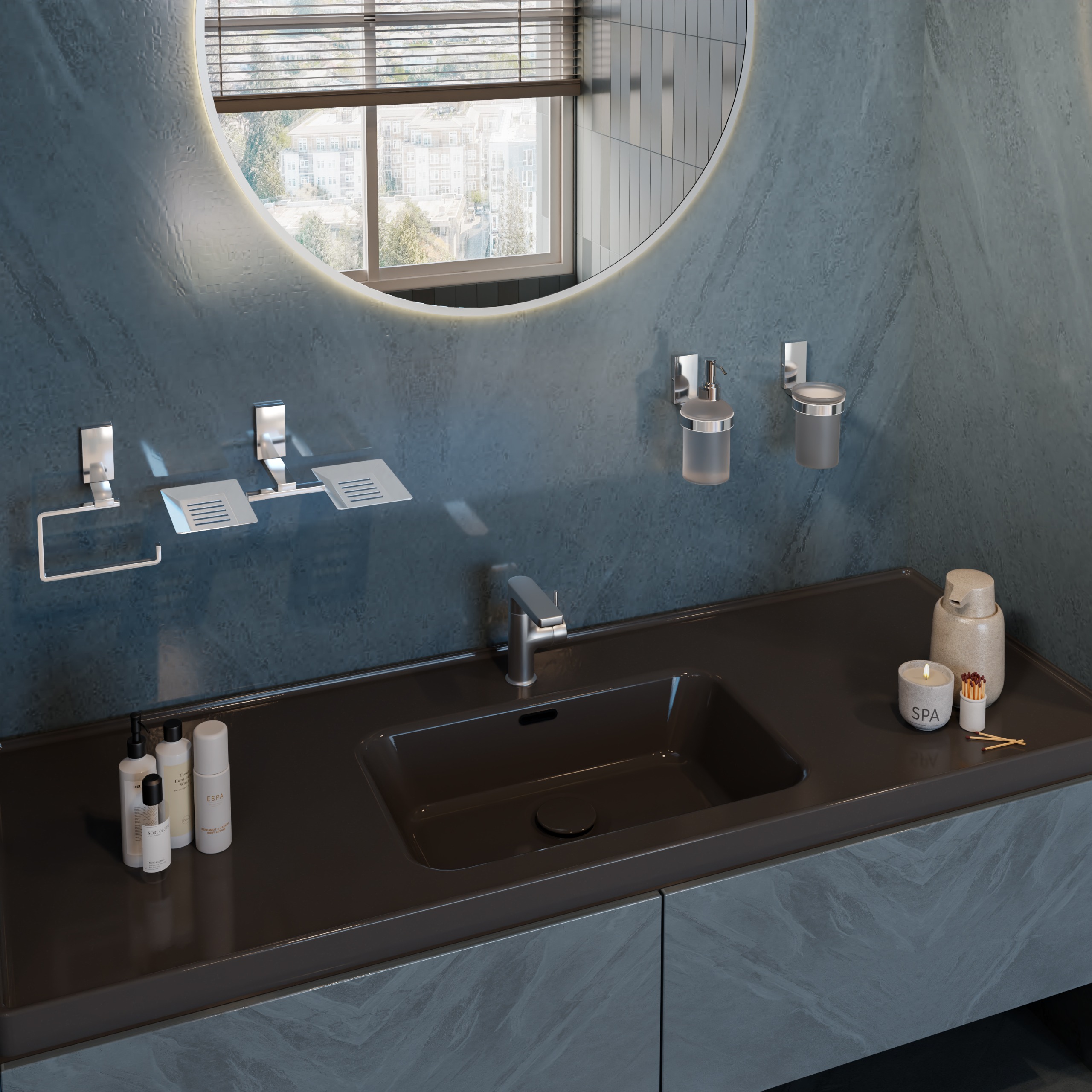
Order is created by the aligned accessories. Spacing can help to create a sense of purpose in a small space, and too much hardware can add visual noise. The smaller spaces can be made sense of by making small decisions.
Materials Carry Meaning
Different materials (metal, glass, ceramic, and engineered materials) make different impressions. The shiny stainless-steel looks like it’s going to last a lot longer, chrome is sleeker, and matte is more contemporary and subdued.
The material should also be able to cope with humidity, water, cleaning chemicals and frequent handling. Choosing materials is an engineering choice for a bathroom accessories manufacturer.
Corrosion Is an Invisible Test
Bathrooms are a challenging place for hardware. There are constant conditions of wetness and surfaces are often in contact with water.
Corrosion resistance is important because an accessory may look great when installed, but not be suitable for the environment and end up looking bad. A durable finish ensures the bathroom’s look lasts longer.
Ergonomics in Everyday Reach
Accessories are utilized practically without thinking. Individuals grab towels and put soap down, hang laundry and retrieve toiletries in routine activities.
Ergonomic design minimises unnecessary movement. The comfort depends on the positioning, the grip and the projection as well as the height.
The best accessories tend to get lost in the routine, as they seem like a natural extension of the outfit. That simplicity is because of the knowledge of how people interact with space.
Minimalism Depends on Details
Minimalist bathrooms have a smaller number of decor items so that each one is more prominent.
A towel hook, shelf or ring is incorporated into the work. Its size, shape and placement can enhance or detract from the space.
As the number of elements decreases, the precision is more important.
Consistency Creates a Collection
Bathrooms are equipped with coordinated accessory sets not random accessories. Continuity is created through matching forms and finishes.
Consistency is more than just looks for manufacturers. Proportions and design language, mounting size, and finish quality must all play across many products.
The coordinated collection enables accessories to be integrated into the bathroom’s architecture.
Manufacturing Precision Matters
Even with small products, there is a need to have manufacturing control. Consistent specification of threads, joints, mounting plates, edges and surface finishes are required.
Small differences in dimensions can make a difference in alignment. There can also be some noticeable differences in the finish, due to accessories being at eye level.
Products that come in contact so often must have quality control.
Installation Is Part of Design
Even the best planned accessory can appear out of place if it is installed at different heights and distances.
To achieve better outcomes, manufacturers should take into account installation methods, mounting hardware and compatibility with common wall conditions. Design continues as the product becomes part of room.
Smart Bathrooms Add New Possibilities
Technology is also making its way into accessories via built-in lighting, touchless access and better storage. The best technology is invisible, addressing real-world challenges in a simple manner.
Sustainability Through Longevity
The selection of materials is not the only element of sustainable design. The life of the product is also important.If the accessory is performing well and looks good for years to come, then don’t replace it frequently.
Durable finishes, practical materials and durable components will help achieve this goal.
Final Words
At the heart of the detail economy of a bathroom accessories manufacturer is an important principle: small things have great responsibilities. They arrange and help to maintain the space, aid in routines, shape the appearance and resist re-wetting and cleaning.
They are of value as a combination of design, materials, ergonomics, manufacturing and installation. If these points are well addressed, accessories don’t seem to be tacked on; they’re an integral part of the bathroom’s language.
A bathroom, when well designed, seldom has one great feature. It comes from subtle details that are combined.