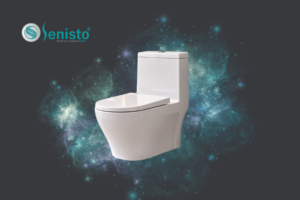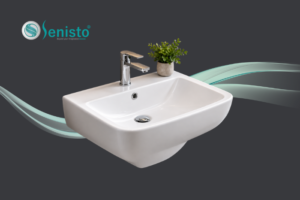
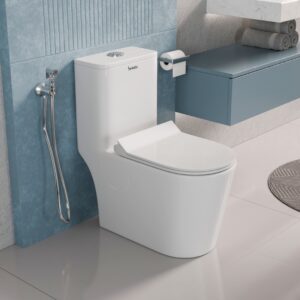
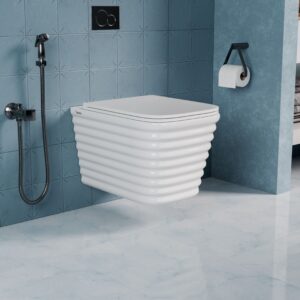
It might seem easy to install a bath fixture, but there are a number of exact decisions that need to be made to make it look that way. The relationship between dimension, ceramic composition, surface finish, flushing performance and installation determines the performance of a product. That’s why the concept of the Best Sanitaryware Brand in India can be investigated by the power of precision and not by advertising words. Design and manufacture that is accurate helps to make more accurate and precise products.
Precision Begins With the Body
Sanitaryware begins with a painstakingly formulated ceramic body. The composition of the raw materials influences the strength, the porosity, the shrinkage and firing behaviour of the product. Consistency of materials is required by manufacturers even before a basin or toilet is formed.
Tolerances may vary after firing due to small changes. The creation of the material is controlled, and precision is the basic foundation of manufacturing.
Geometry Must Survive Manufacturing
Whilst designers can design elegant curves, thin edges and compact profiles, ceramic will change during the drying and firing process. Products contract, and there are more types of products that will be more prone to distortion.
Manufacturers need to be prepared for this trend when designing moulds and dimensions. Knowing how the material will react in its finished form as sanitaryware is the first step in creating a precision final product.
Dimensional Accuracy Matters
A sanitaryware fixture has to fit within a planned bathroom. Projection depth, toilet height, and basin width should match plumbing, counters, walls, and surrounding furniture.
The slightest differences can make a difference in installation or cause a noticeable misalignment. Precision now is not only a measure, but a part of visual harmony.
Glazing Requires Control
The glaze forms the surface which the user sees and feels; however, uniform application of the glaze demands careful control of the process. Colour, gloss and smoothness may be affected by the composition of the glaze, firing and application techniques.
The ideal surface design should be both functional and aesthetically pleasing, offering benefits like self-cleaning and durability against regular bathroom use and environment.
Firing Defines Performance
One of the key processes in ceramic production is the kiln. The shaped body is heated, which develops the final relationship between ceramic and glaze.
Strength, shrinkage and surface development may be affected by temperature distribution, firing time, and process stability. The controlled firing enables manufacturers to achieve repeatability in production.
Accuracy or precision is not only determined by the temperature but by the consistent management of the firing cycle as a whole.
Water Needs Engineering
Bathroom fixtures are designed to work with water, and their performance is dependent on internal geometry. Water should not be splashed in basins, just directed toward the drain. Toilets must be able to use the water and flush properly.
There’s water efficiency as well. The modern-day sanitary ware needs to have a balance between performance and responsible use. This involves attention to internal channels as well as to the shape and flow of the bowl and not just to its external appearance.
Comfort Has a Measurable Side
In ergonomics, precision is also found. The height of the toilet, depth of the basin and available clearance are important factors that affect the ease of use of a toilet.
Human interaction can be conveyed in terms of dimensions and spatial relationships. Good design makes the product feel natural, which is achieved by carefully resolving those measurements.
Consistency Builds Trust
The art of making one correct fixture is different from the art of making thousands of fixtures. Repeatability is a key component of the quality of an industrial process.
Manufacturing control, inspection systems, and process documentation assure the consistency of manufacturing. Other differences which become noticeable at installation time can result from variations in moulding, glazing or firing.
If several bathrooms share the same collection, it must be consistent.
Technology Supports Precision
Digital modelling, automated production and inspection technologies are being used more and more to support modern sanitaryware manufacturing. 3-D design can be used to make improvements to shapes before tooling, and process monitoring can detect variation earlier.
These technologies don’t supplant physical skill and knowledge; they make decisions more quantifiable and repeatable.
Human judgement and controlled technology make for a better quality system.
What the “Best” Really Represents
Best Sanitaryware Brand in India is sometimes touted as marketing jargon, but it’s better to look at the system which is behind the product. Quality of materials, mould accuracy, glazing, firing, hydraulic performance, ergonomics, inspection and consistency are all involved in creating the final experience.
It’s not a single feature that builds long-term credibility. If they are able to repeat a good decision across products and production cycles, then they build trust.
Final Words
Consistency makes technical accuracy reliable, trustworthy, and usable on a day-to-day basis.
The best precision occurs when it is consistent from product to product, application to application, and production cycle to production cycle.
The exactness code of the Best Sanitaryware Brand in India isn’t hidden in one great technology. It can be found in controlled details, ranging from the formulation of the ceramics, the design of the mould, to the glazing, firing, the dimensions, water flow and installation.
A bathroom fixture is modern when all of these details are put together, but not noticed by the user. The result seems simple because it’s been carefully designed underneath.
Precision isn’t just a production requirement. It is the field that makes ordinary sanitaryware into a reliable, comfortable and harmonious design.