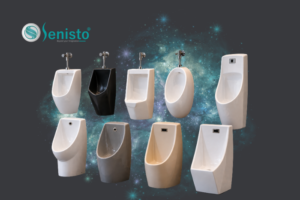
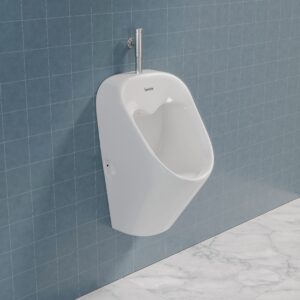
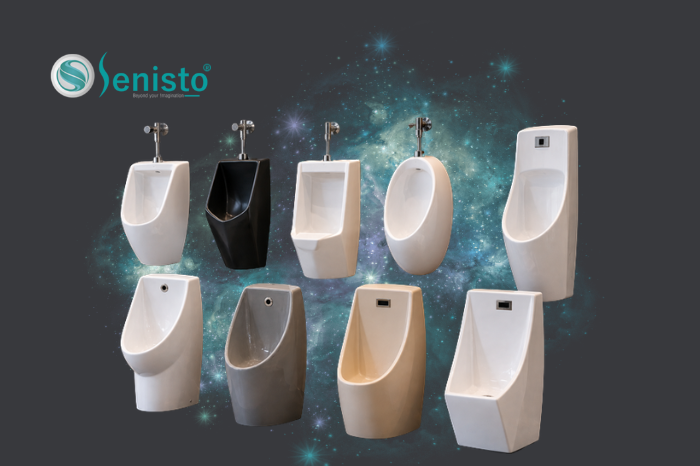
Movement, repetition and cleanliness are the three elements of the design of a commercial bathroom. Unlike a domestic bathroom, it can be used by hundreds of people during one day, and therefore, hygiene is not just a matter of cleaning it regularly. Each fixture serves a purpose in helping to manage contact, guide water flow and promote effective maintenance. This is a design problem for a urinal manufacturer: integrating ceramic manufacture, human behaviour, water management and sanitation into a functional object.
Hygiene Begins With Form
The form of the urinal is not entirely a matter of aesthetics. Its geometry affects the interaction of the user with the fixture, and the ability of water to reach the appropriate surfaces.
The right form will promote good drainage and minimise pockets of unnecessary moisture or residue. Smooth transitions, well-planned contours and right depths can all help with easier cleaning.
This is where industrial design is very much linked to hygiene. While the outside appearance of a fixture might seem straightforward, the inside geometry has a huge influence on the fixture’s functionality.
Surface Quality Matters
The smooth and tough surface of ceramic is also widely admired in sanitaryware, and it is ideal to be used in this kind of atmosphere. But the quality of that surface is dependent on the precision of the manufacturing.
Maintenance of a fixture may be difficult if it has an uneven finish, tiny imperfections or a patchy glazing. A well-designed surface will minimise deposit buildup and facilitate easy cleaning.
Surface quality is thus more than just an aesthetic issue for manufacturers; it is a part of the hygiene equation.
Water Is Part of the Design
Water interaction with the ceramic surface also plays a role in the hygiene of the urinal. Its goal is not to use more water, but to use water effectively.
The effectiveness of the rinsing of the fixture may be affected by flushing patterns, water direction and drainage behaviour. Water flow that isn’t controlled properly can result in some water being insufficiently cleaned and some water unnecessarily being wasted elsewhere.
Water is thus considered a controlled resource in the modern design. The challenge is to obtain the cleaning effect in an appropriate manner while ensuring the responsible use of water.
Human Behaviour Cannot Be Ignored
All bathroom fixtures are designed for the use of human beings, and human beings do not behave in the exact way that designers think. The successful urinal, then, should be one that can be easily used, that is, one that will fit into the human way of using it, not be a perfect urinal as such.
User experience is affected by height, accessibility, spacing and even visual clarity. These aspects are especially critical in a commercial setting as users are likely to be of varying shapes, ages and experience with the space.
Thoughtful urinal manufacturers take these variations into account when designing the fixture rather than just a mechanical product.
Installation Influences Hygiene
The worst thing that can happen is to install a well-designed urinal and have it fail. The final result is affected by positioning, plumbing connections, drainage slope and flushing systems.
Comparable to the ceramic, the connection among fixtures and surrounding infrastructure is important, as hygiene goes beyond the ceramic. The water should exit efficiently, connections should be secured, and access for maintenance should be convenient.
This means sanitaryware manufacturers must consider the whole installation environment and not just their factory gate.
Maintenance Is Designed In
A good commercial bathroom can be easily cleaned without a lot of work put in. Design of fixtures should be based on this principle at the outset.
Less hard-to-reach places, accessible elements and smooth surfaces can make regular maintenance easier. That’s important because cleaning agents are frequently required to work in a time-sensitive manner, especially in airports, restaurants, hospitals, offices and other high-usage areas.
If hygiene is a key factor, designing for maintenance can also help to save on operational effort.
Durability Supports Long-Term Cleanliness
Commercial sanitaryware is used on a regular basis, cleaned often and is exposed to water and cleaning chemicals. Durability is thus linked to the issue of hygiene in the long term.
This can lead to a damaged surface, weak fittings or poorly maintained drainage over time, making cleaning more difficult. Proper materials and manufacturing procedures assure performance through the fixture’s lifespan.
That’s why quality should not just be determined on the day of installation of a urinal.
Hygiene Becomes an Architectural Principle
The best commercial bathrooms are now becoming an integrated whole, with fixtures and surfaces, ventilation, drainage, lighting and circulation all functioning together.
In such a system, the urinal is not just a ceramic object. Its size affects spacing, its flushing system affects water management, and its surface affects cleaning routines.
This wider view is an opportunity for the modern manufacturer of urinals to make a contribution to the bathroom rather than just to the individual product.
Final Words
Many decisions go into the design of
the hygiene architecture of a urinal – form, surface, water flow, ergonomics,
installation, maintenance and durability. All of these elements are not
independent.
The most successful designs are those
which acknowledge that commercial hygiene is a combination of a behavioural and
an engineering problem. In combination, a simple bathroom fixture transforms
into a well-thought-out part of a cleaner, more efficient and more functional
space.